NBA Jersey Wiki
NBA Finals Patch Guide (1990s–Now) — Read This Before You Add One to Your Jersey

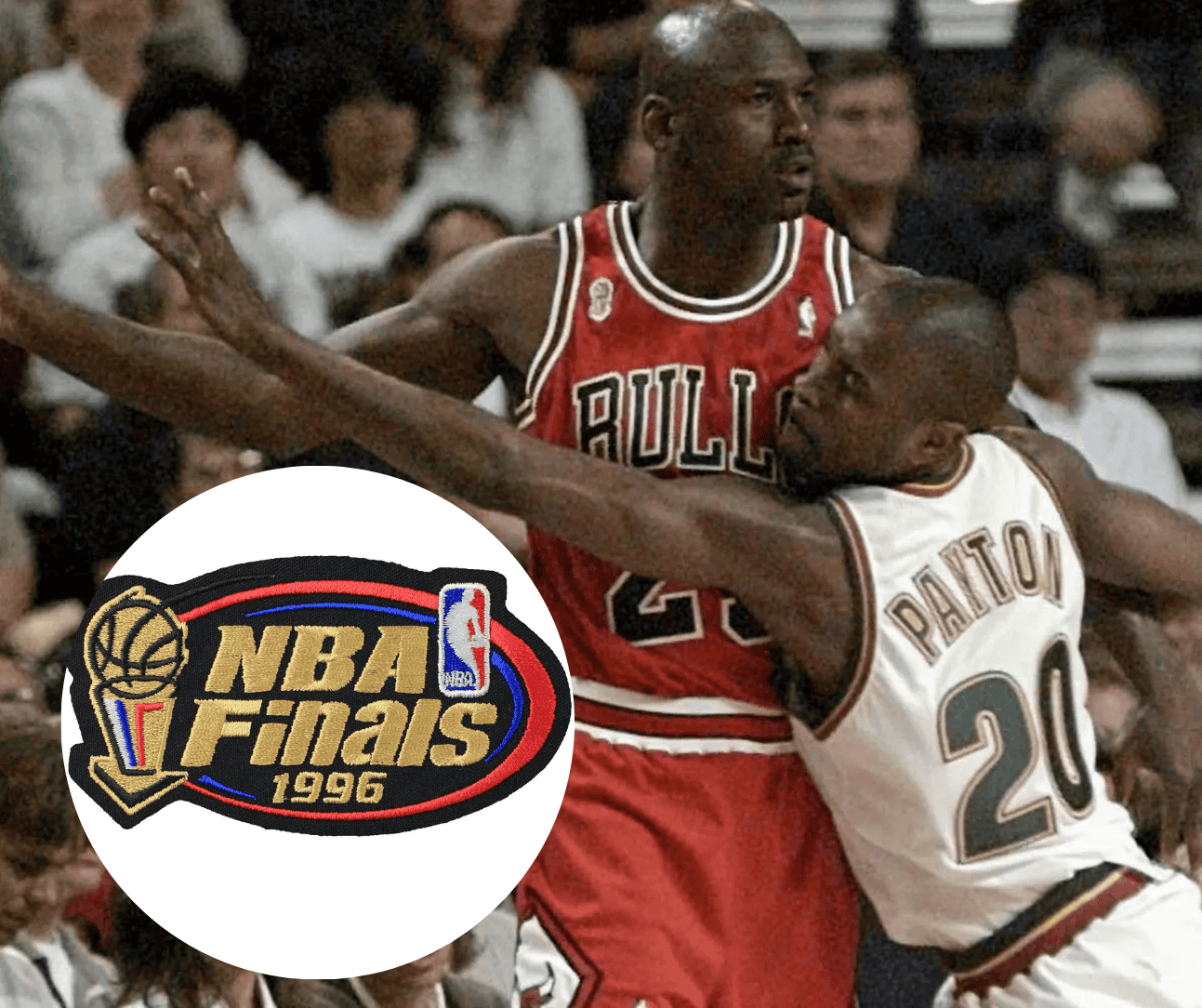
The history of NBA Finals patches on jerseys is relatively short compared to the long history of the league itself. The first time such a NBA Finals patch appeared was during the 1995–96 NBA Finals—best known as the season when the Chicago Bulls won 72 games.
That year, the Bulls defeated the Seattle SuperSonics in the Finals, beginning their second three-peat era.
1996: The Beginning of NBA Finals Patches
Unlike previous years, the Finals logo on the court floor was redesigned in 1996, and for the first time, it was also added to players’ jerseys. The jersey patch borrowed the championship trophy design that appeared in the new Finals logo on the court.

1997–1998: Becoming Tradition
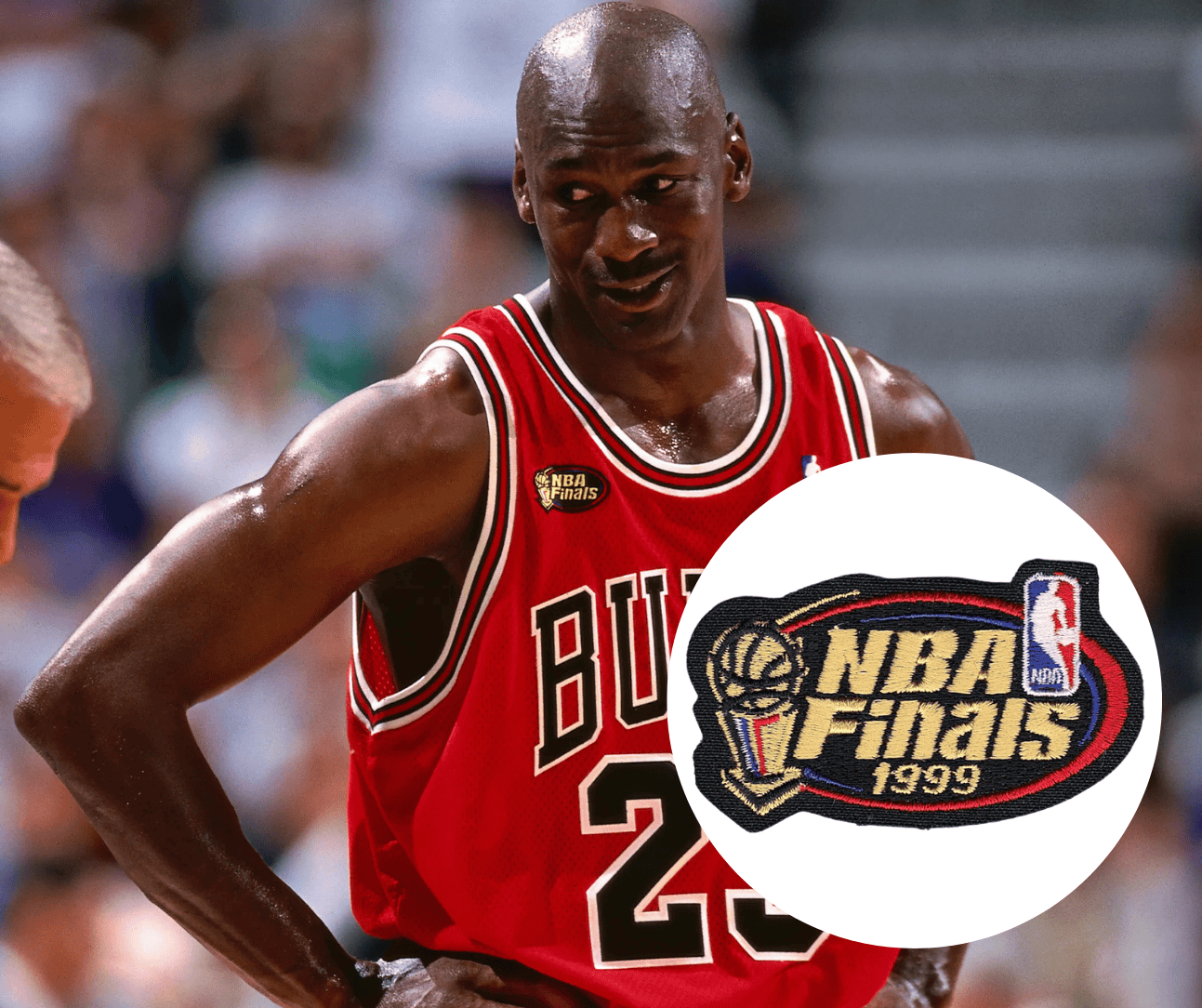
From this point on, adding Finals patches to jerseys became a custom. The Bulls cold-bloodedly sent their opponents packing again in both 1997 and 1998. The 1997 Finals patch continued the 1996 design. By 1998, a more complete Finals logo was embroidered on the jersey.

1999: San Antonio Spurs
In the 1999 Finals, as the Spurs battled the Knicks, the patch retained the 1998 championship design.

2000–2001: Into the New Millennium
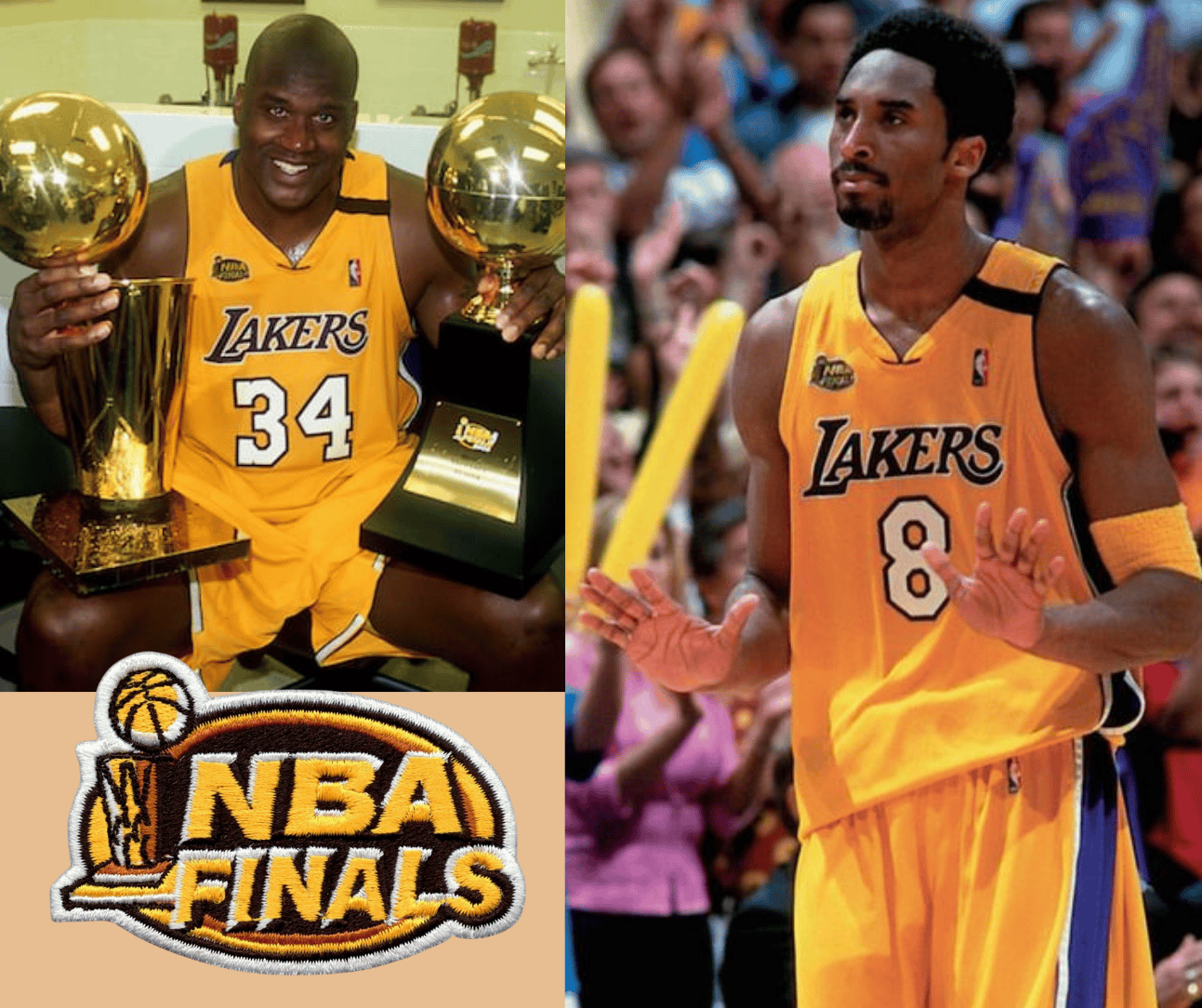
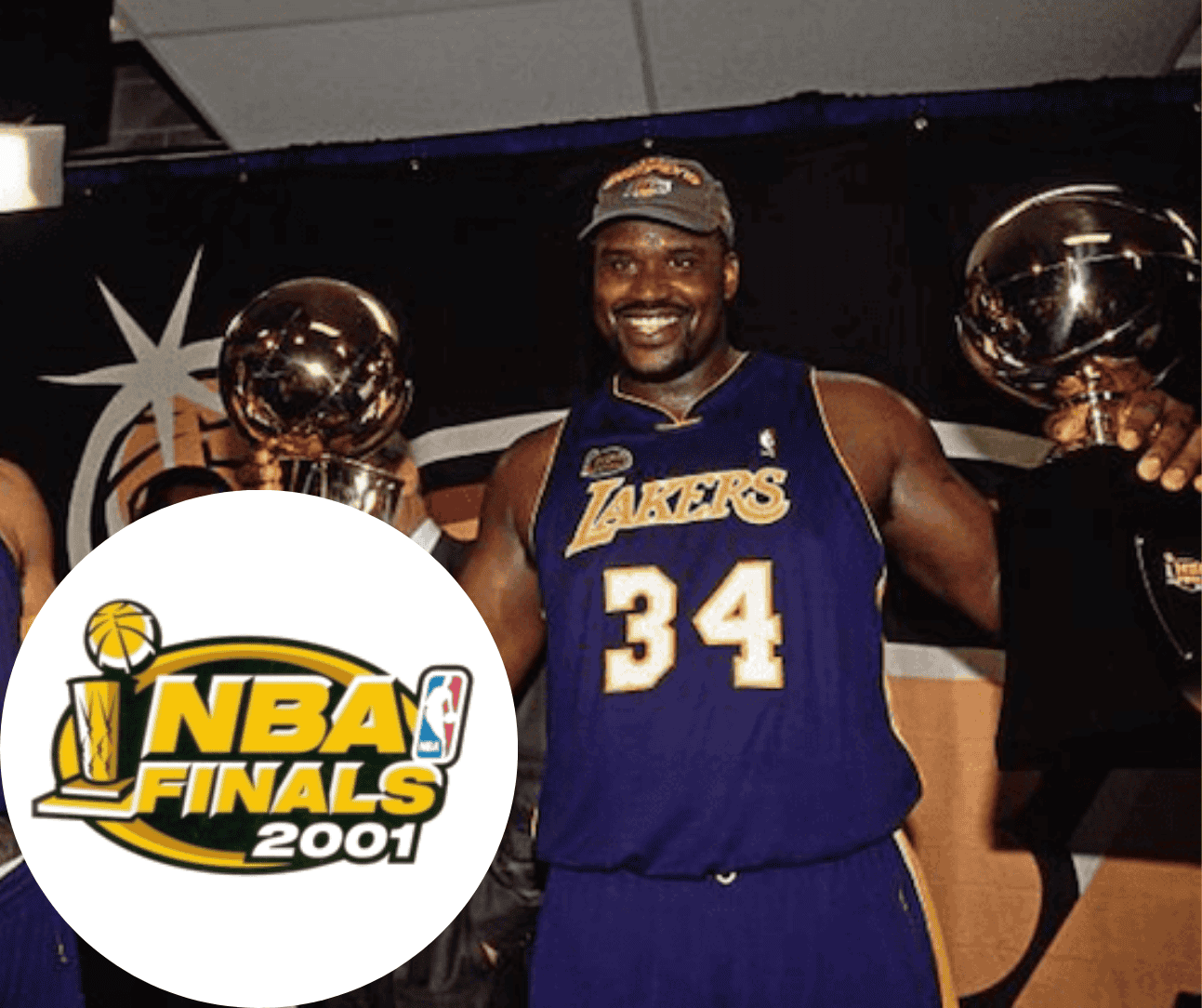
As the Lakers began their first three-peat, the Finals logo was fine-tuned in 2000. The patch followed accordingly. In 2001, the patch design continued from 2000 with no major changes.
2002: The 9/11 Effect
After the 9/11, NBA jerseys during the 2001–02 season included a memorial patch. For the 2002 Finals, because a memorial patch was already placed at the chest, the Finals patch was simplified and integrated with the NBA logoman.

2003–2004: Simplification
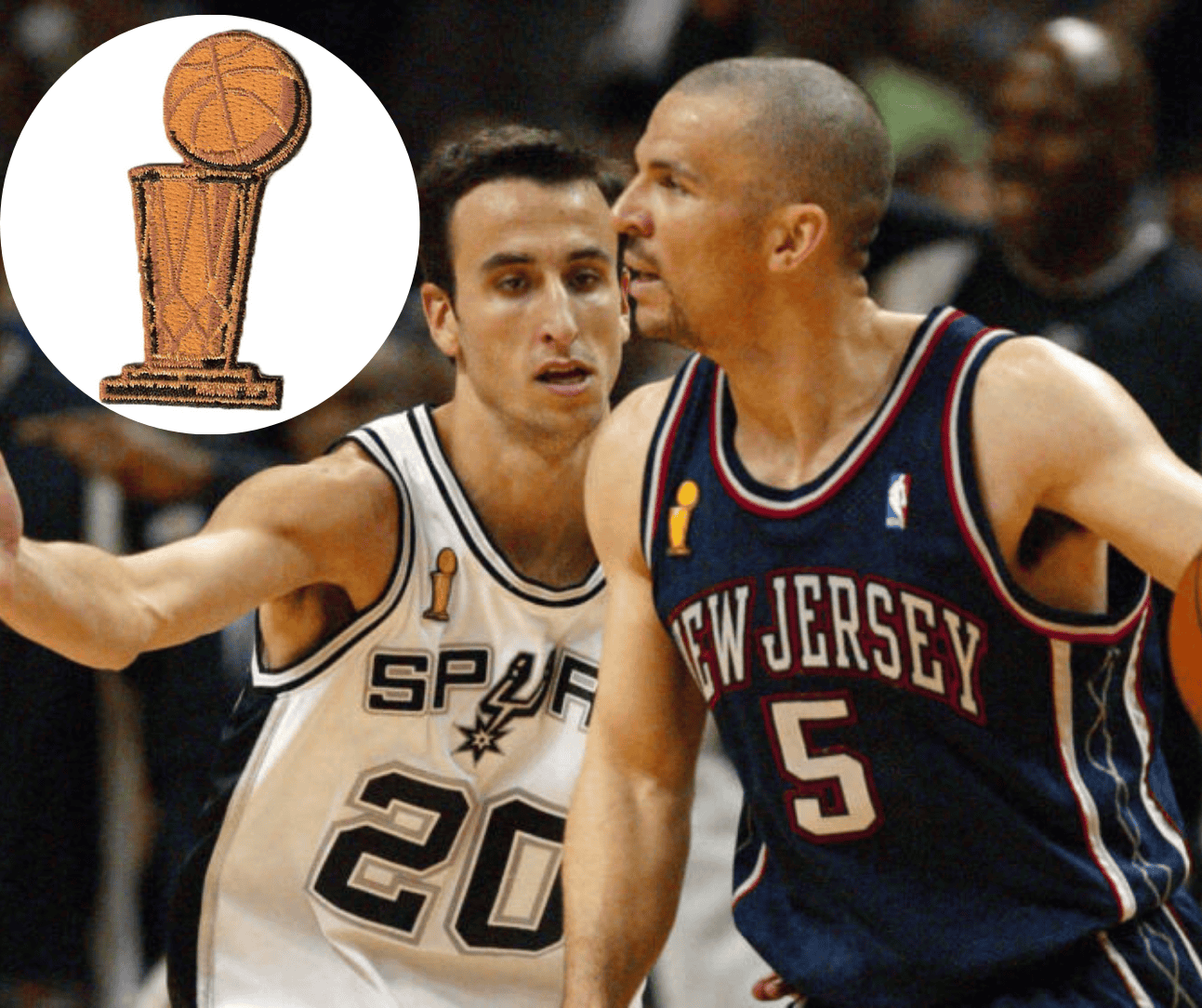
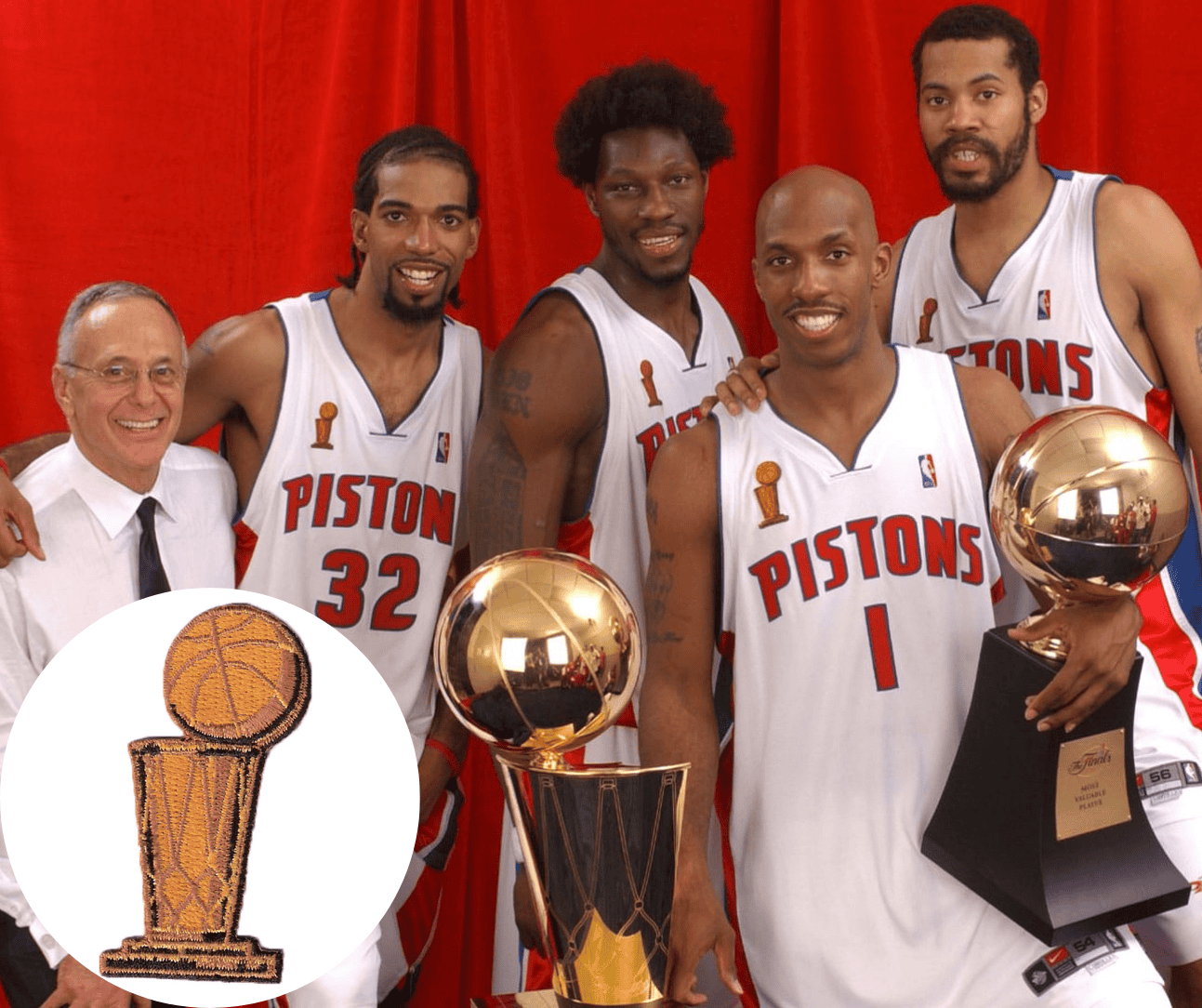
In 2003, as the Nets returned to the Finals, the simplified trophy logo patch from the previous year was retained. The 2003 and 2004 Finals continued the same simple golden trophy design on a round patch.
2005–2006: Polishing the Details
2005 saw the Spurs edge the Pistons in a classic Finals.
2006 saw the Heat come back from a 0–2 deficit to win the title.
The patch design from 2005 continued into 2006.


2007–2009: Refinement and Texture
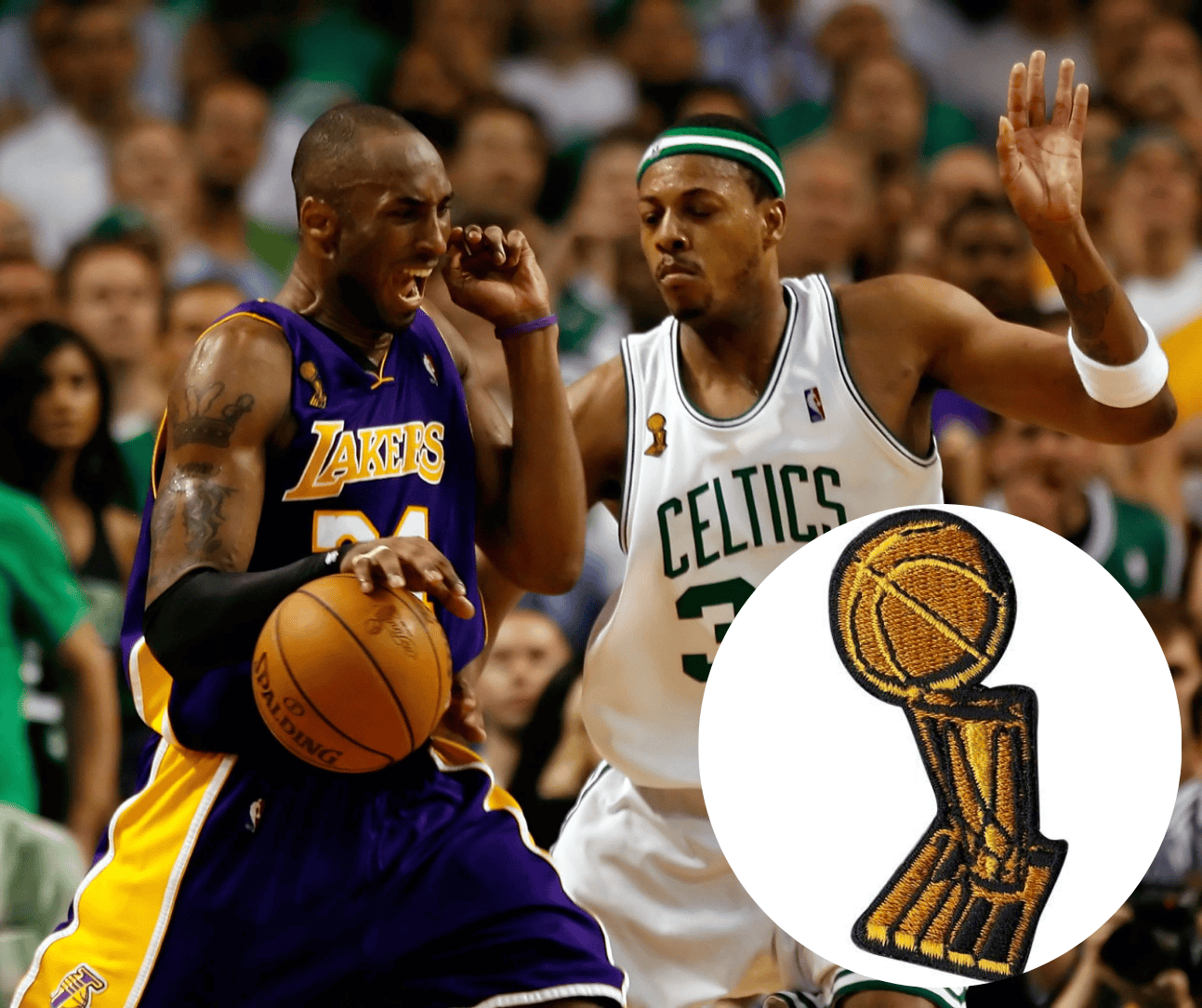
In 2007, the patch design was refined again, with increased gloss and depth.
The golden trophy remained, but with more shading and stitched texture.
The 2008 Celtics vs Lakers patch followed the same design. So did the 2009 Finals.

2010–2014: The Modern Template Emerges
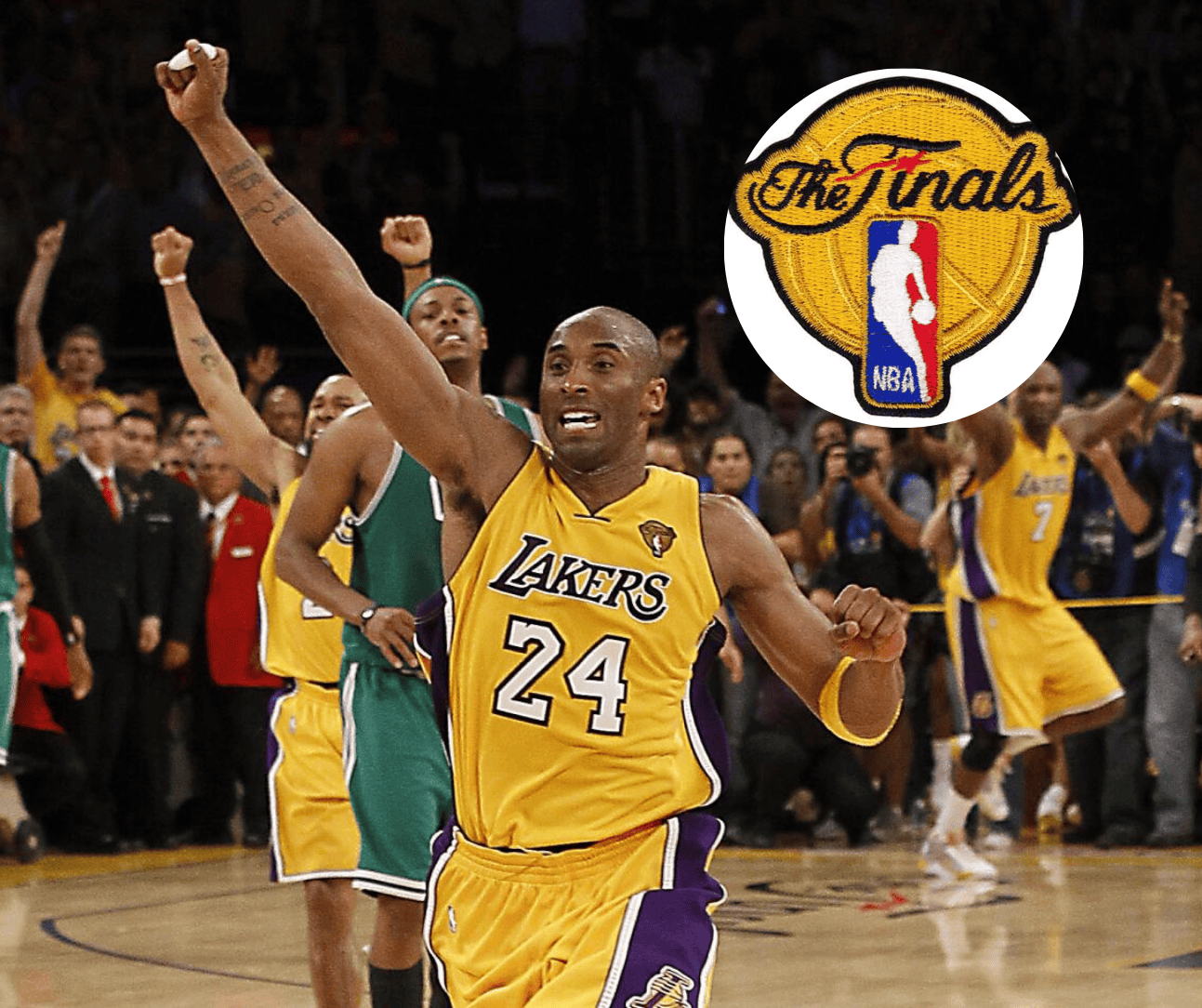
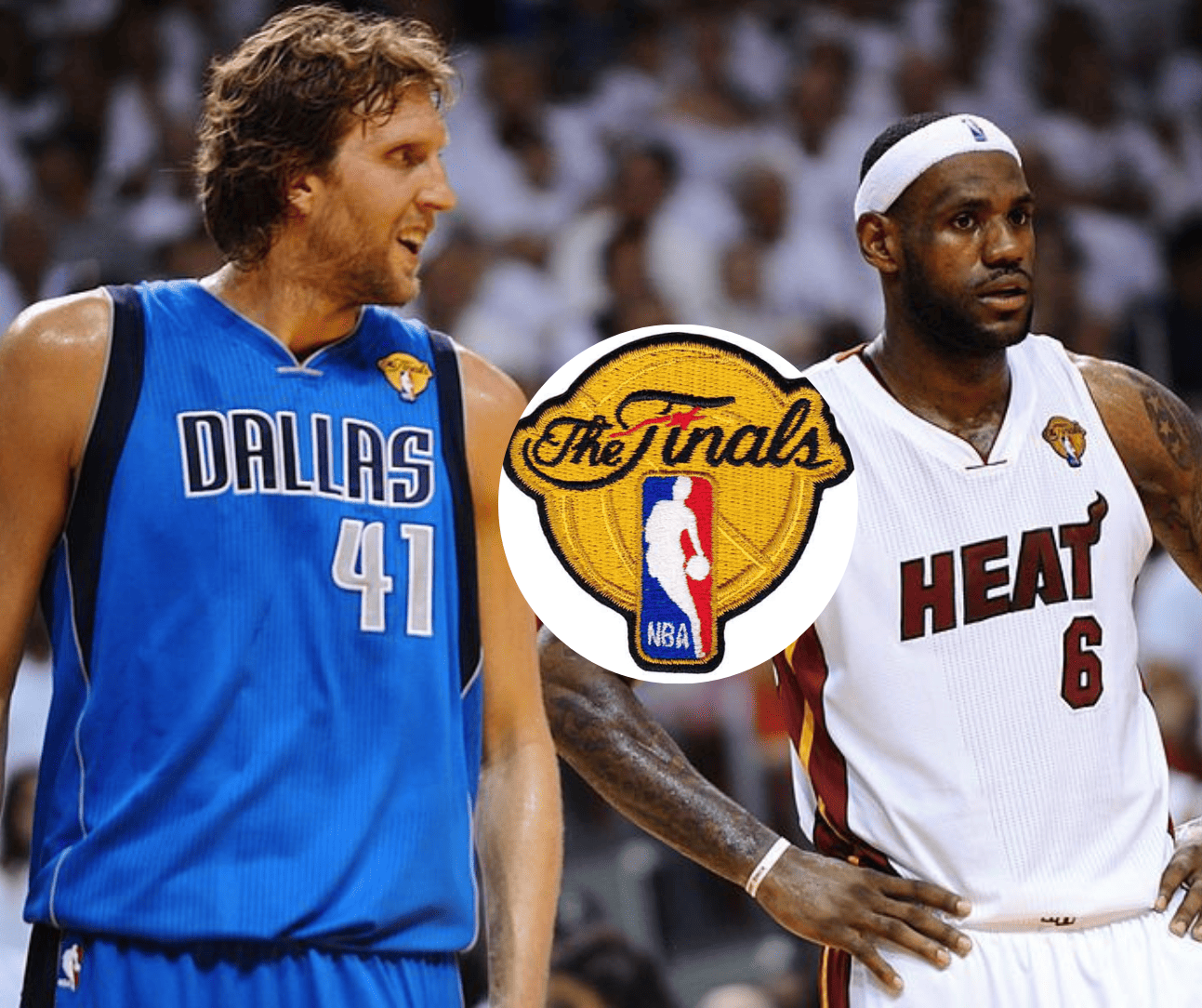
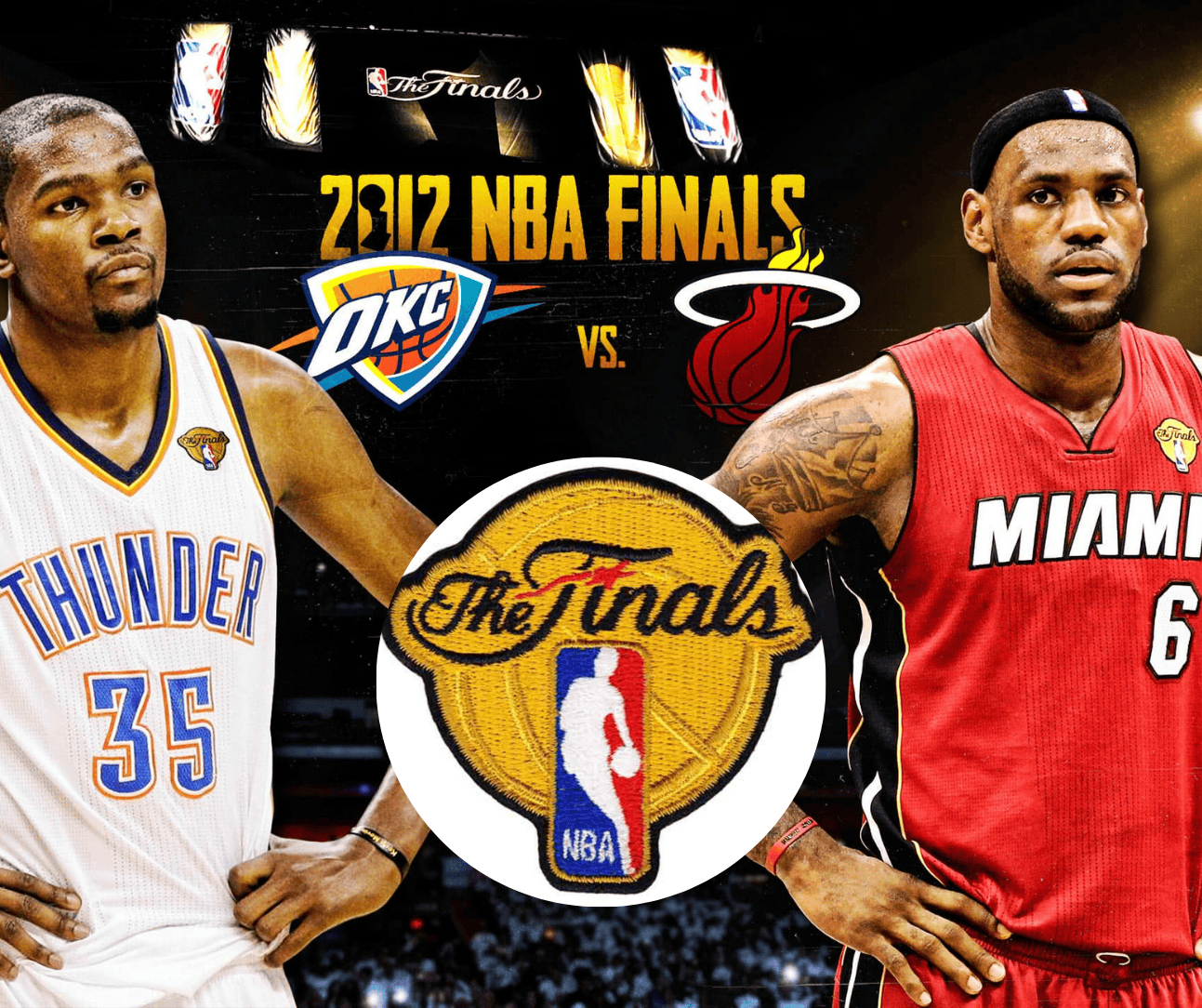
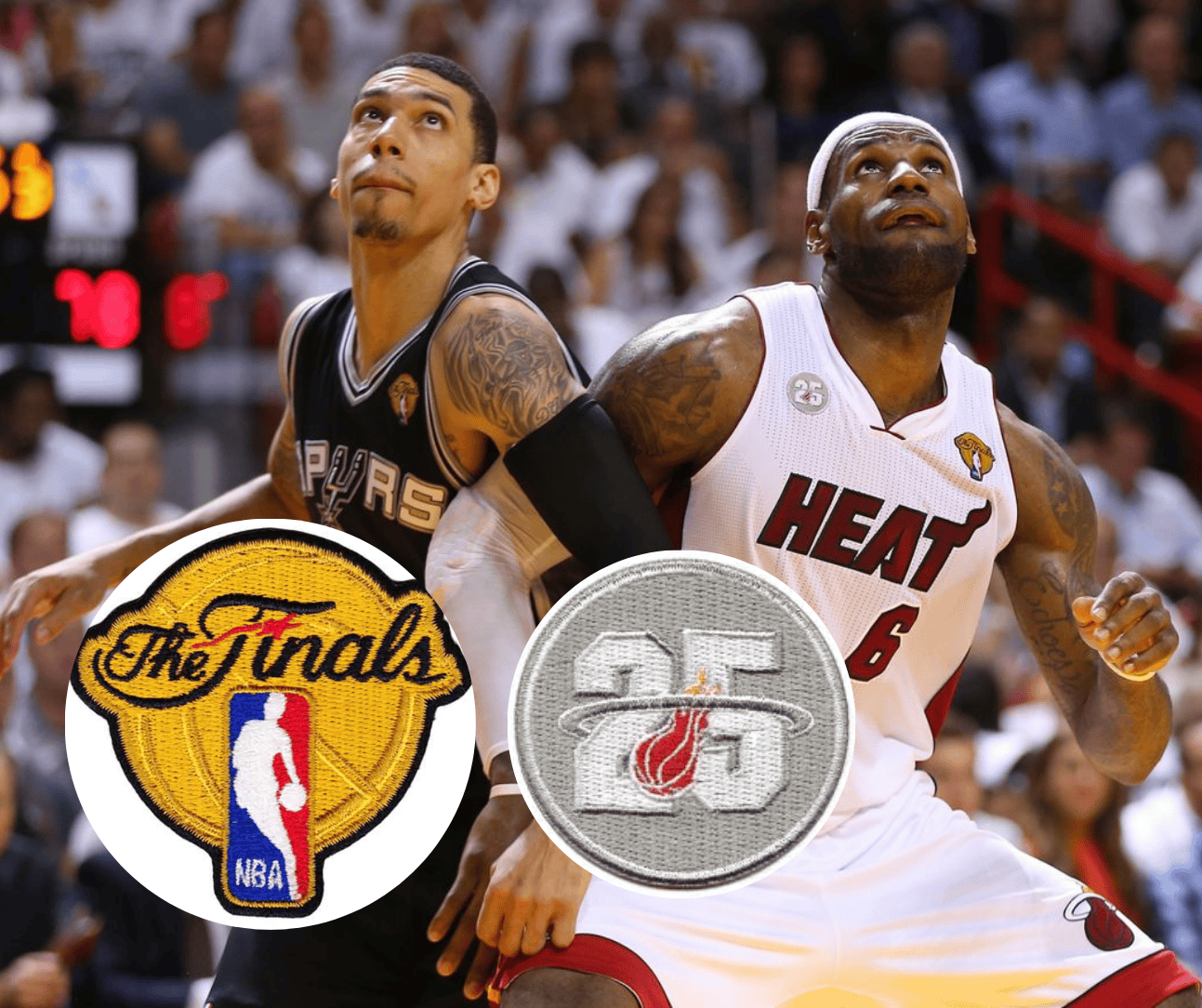
The 2010 Finals patch may look very familiar—indeed, starting that season, the patch design evolved into the now-classic version: A golden basketball atop the Finals trophy, accompanied by the NBA logoman, all within a round patch. This design lasted all the way until the 2017 Finals.

2015–2016: Patch Moves to the Back
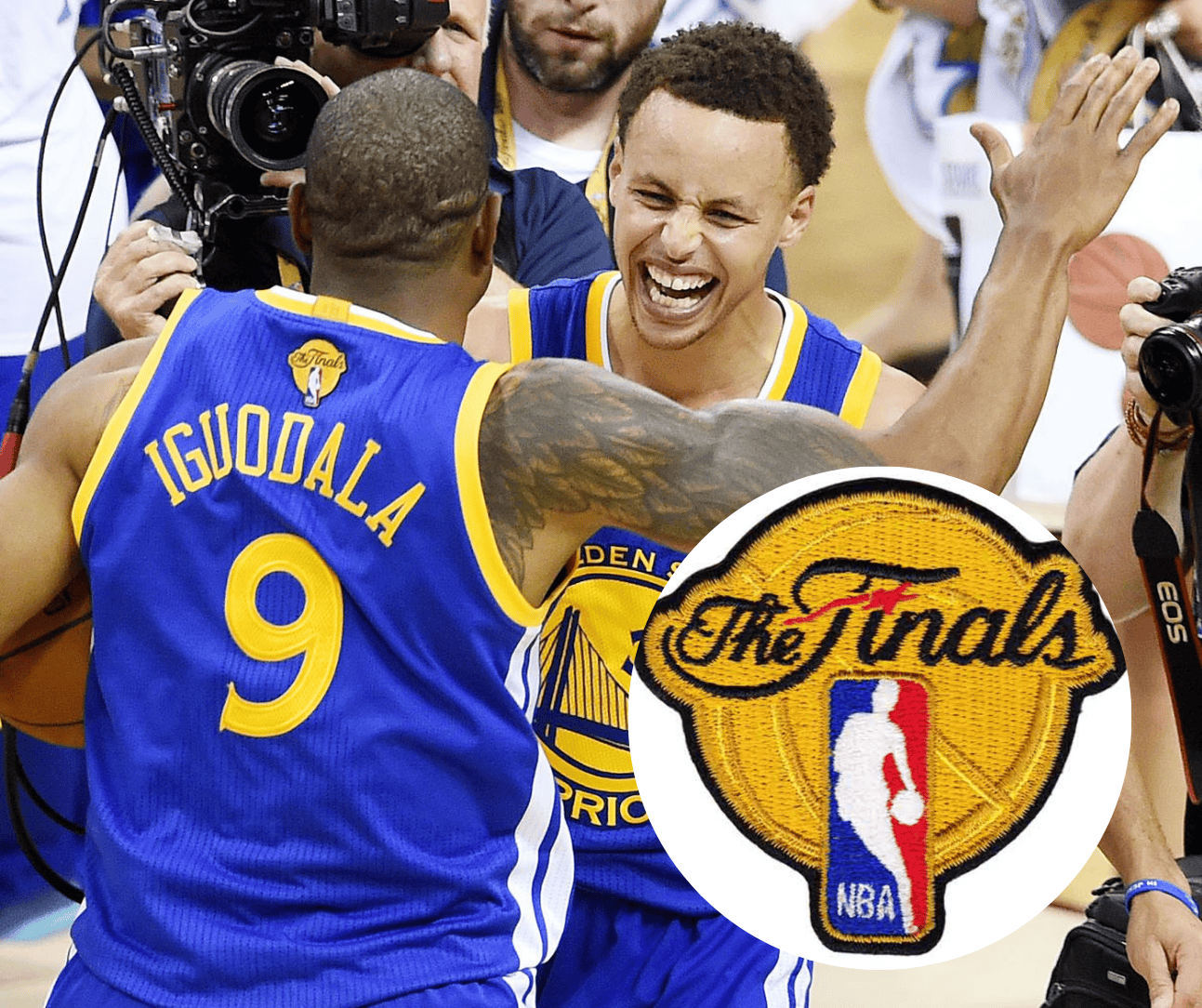
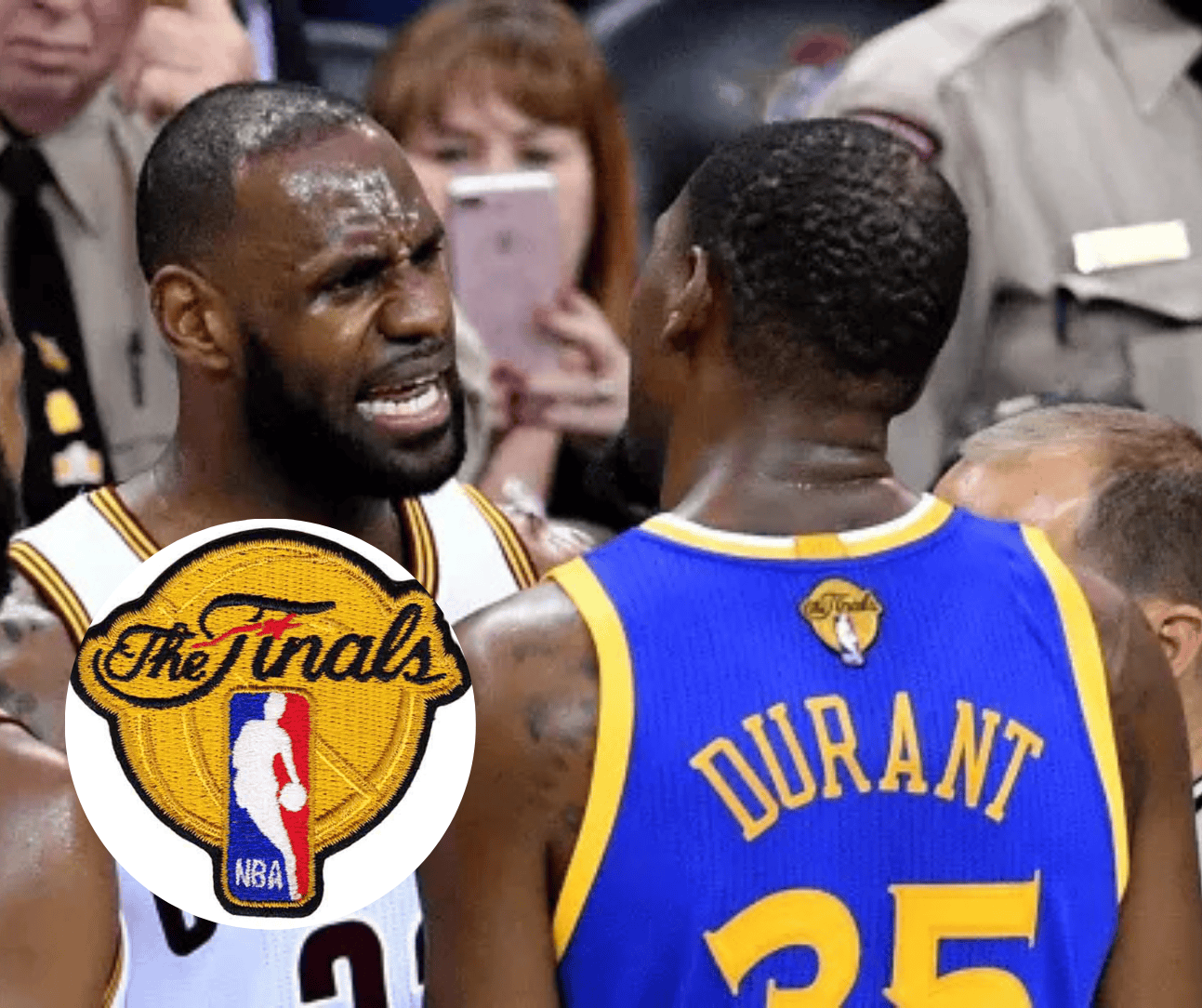
Starting with the 2015 NBA Finals, the NBA moved the league logo (Logoman) to the back of the jersey collar. Accordingly, the Finals patch was also moved to the back of the jersey.

2017–2021: Nike Takes Over – Material & Design Change
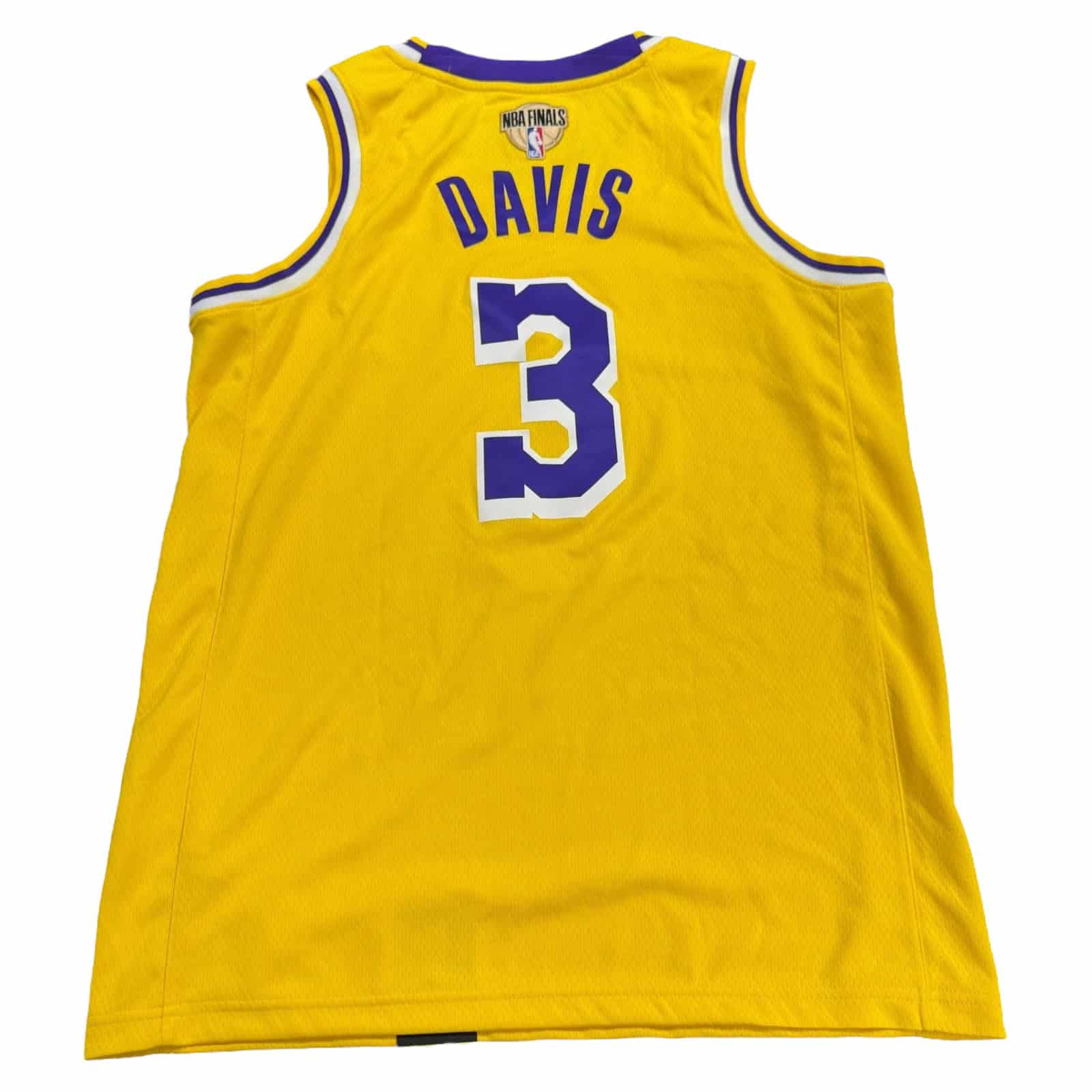
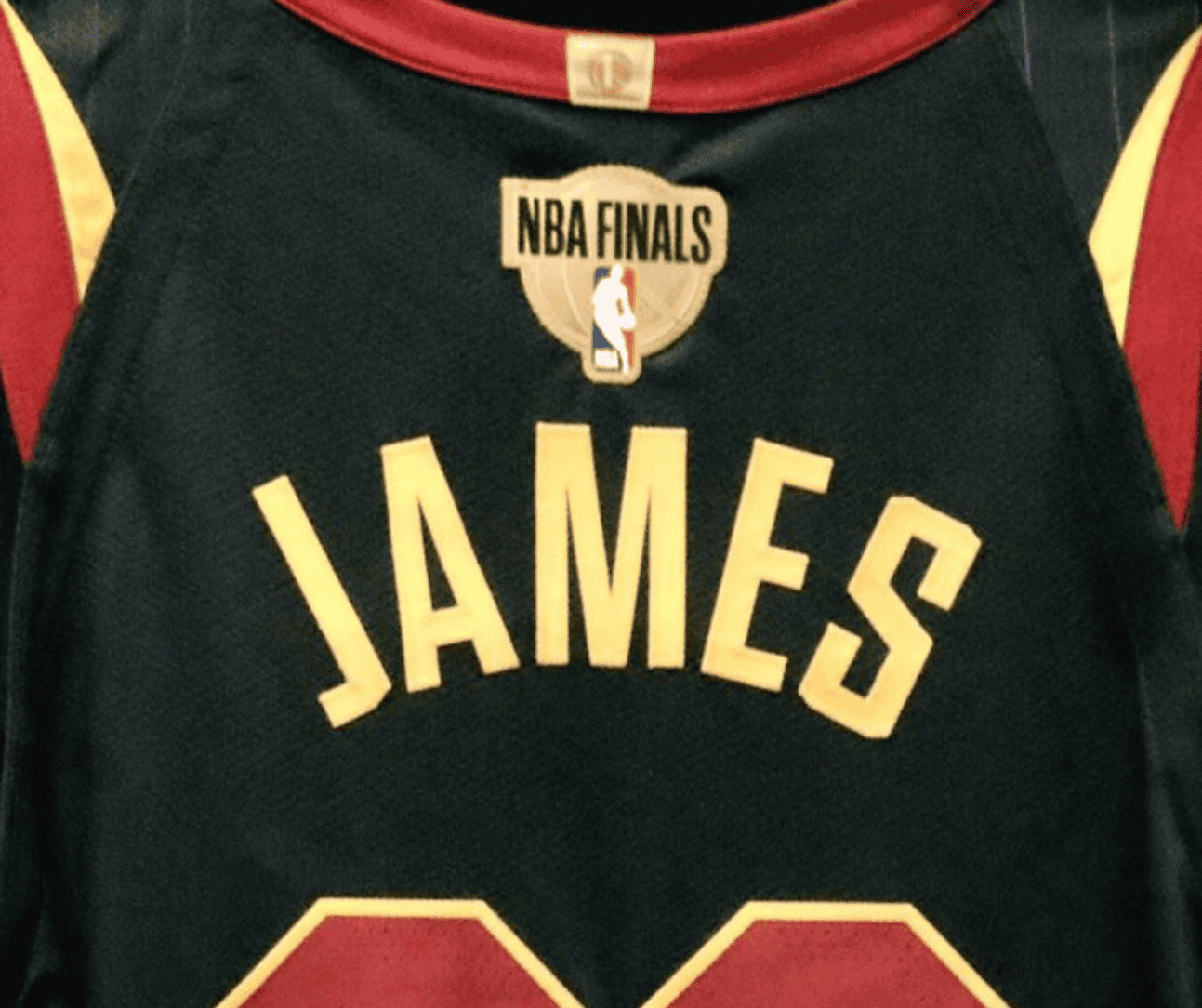
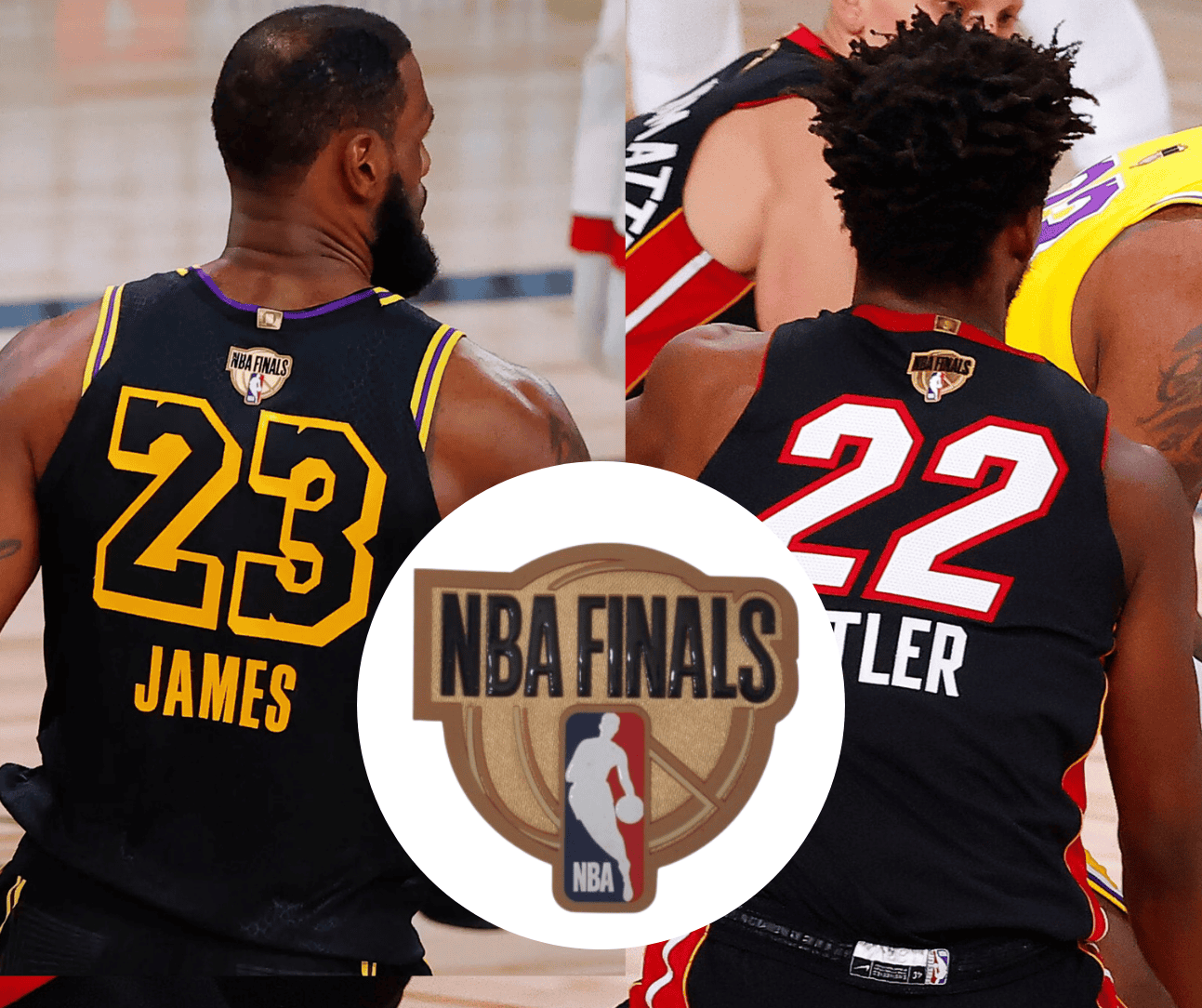
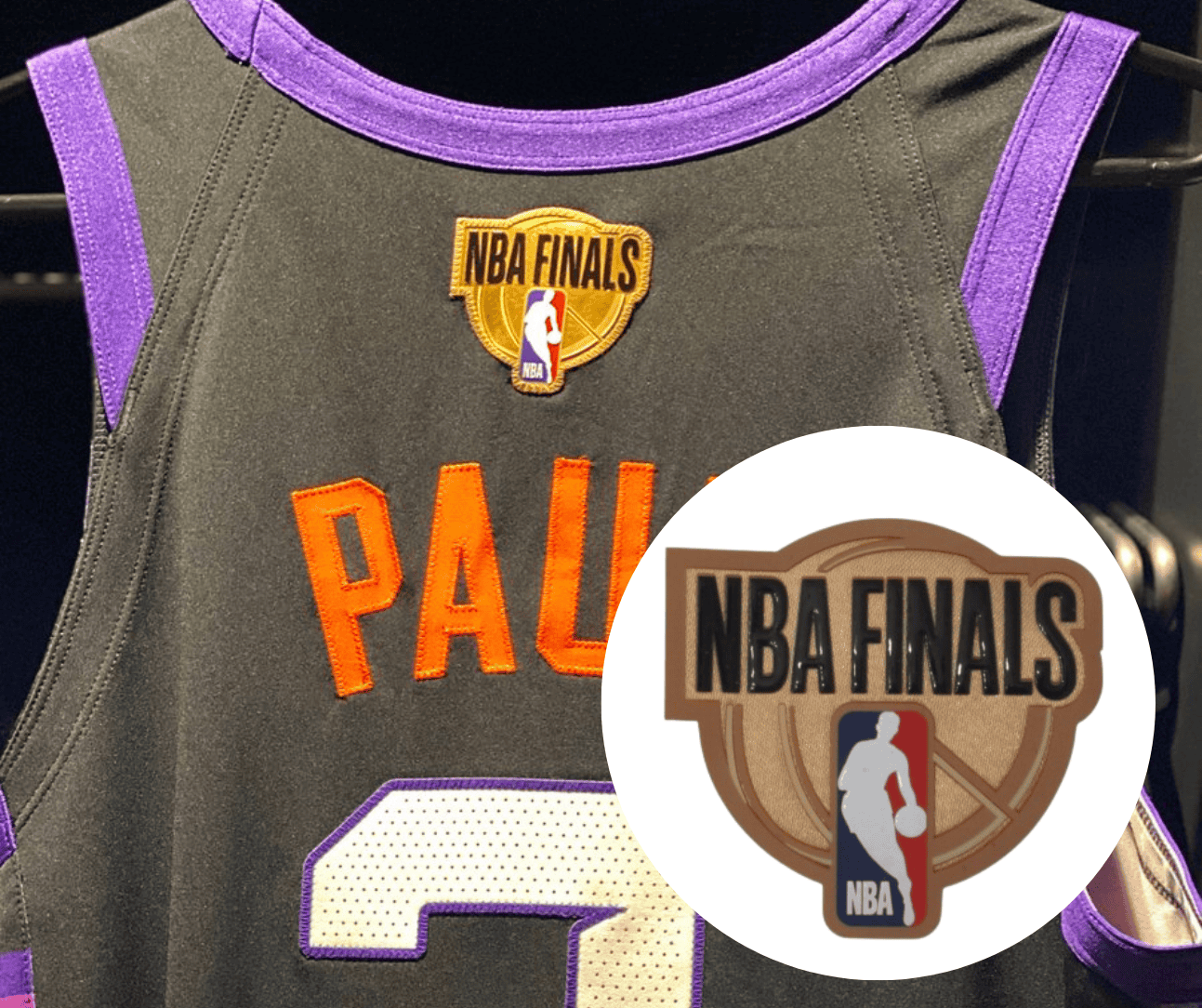
Starting with the 2017–18 season, Nike replaced Adidas as the official NBA uniform supplier. Jerseys became lighter and thinner, and the Finals patch underwent slight adjustments: The original Finals script was replaced with bold “NBA FINALS” lettering. Embroidery was replaced with a rubberized heat-press patch. This new design has remained in use ever since.
From 2017 through 2021, the NBA Finals patch featured a consistent circular design with:
A gold Larry O’Brien trophy in the center; The NBA logoman beneath it; The phrase “NBA FINALS” across the top in all caps. Nike using a rubberized, heat-press material for a lighter, flatter look. The patch was placed on the upper back of the jersey, just below the collar, becoming the Finals uniform standard.




2022–Present NBA Finals Patch
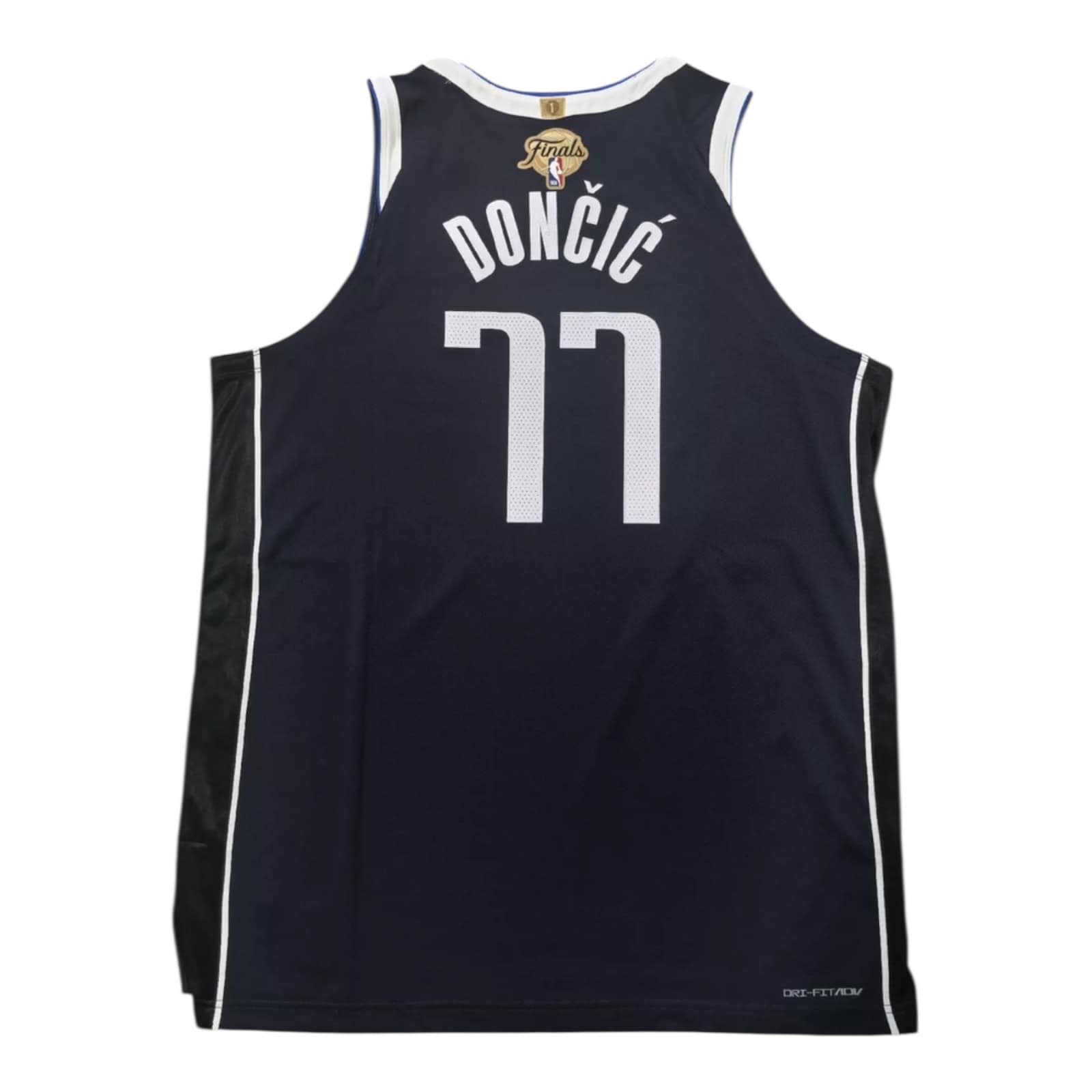
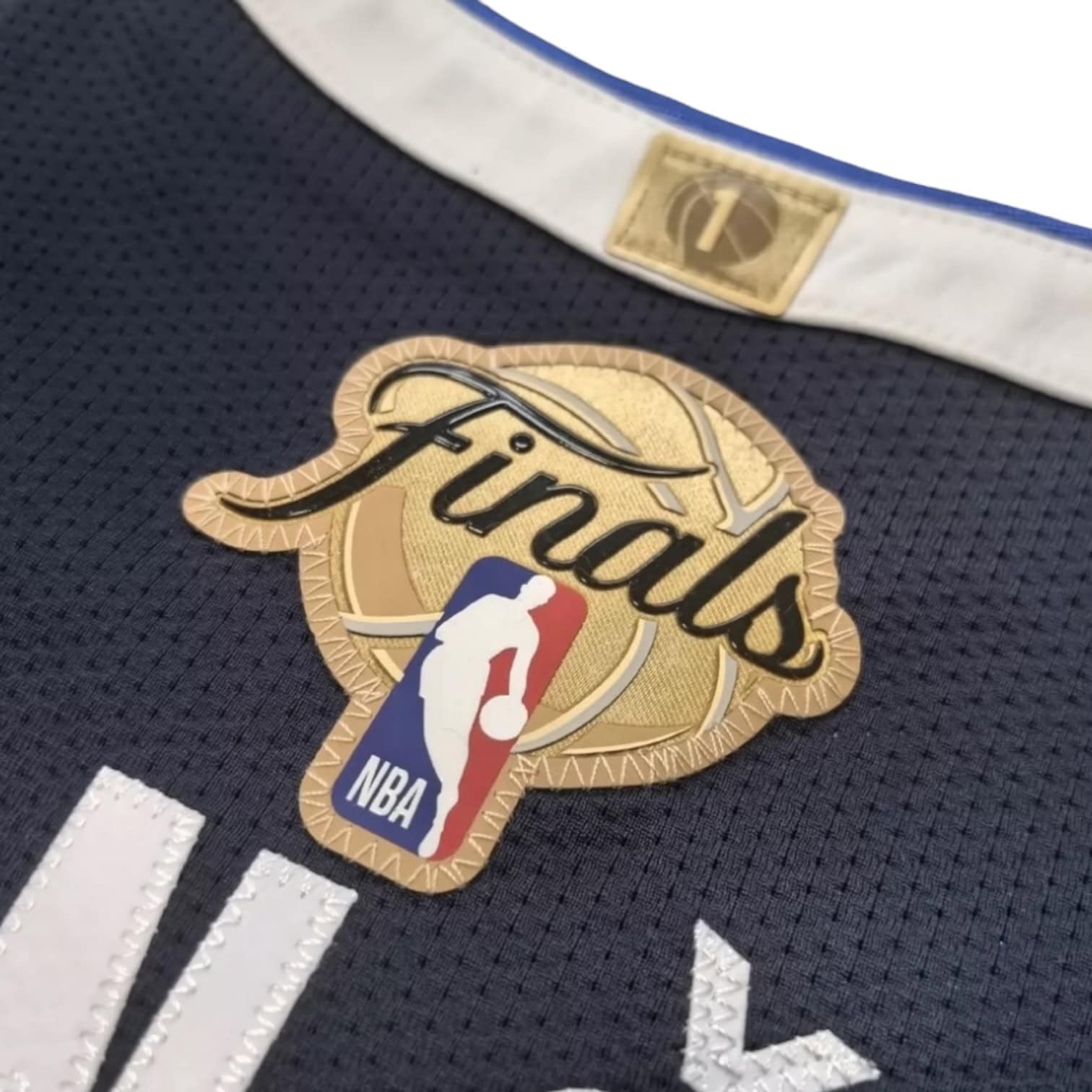
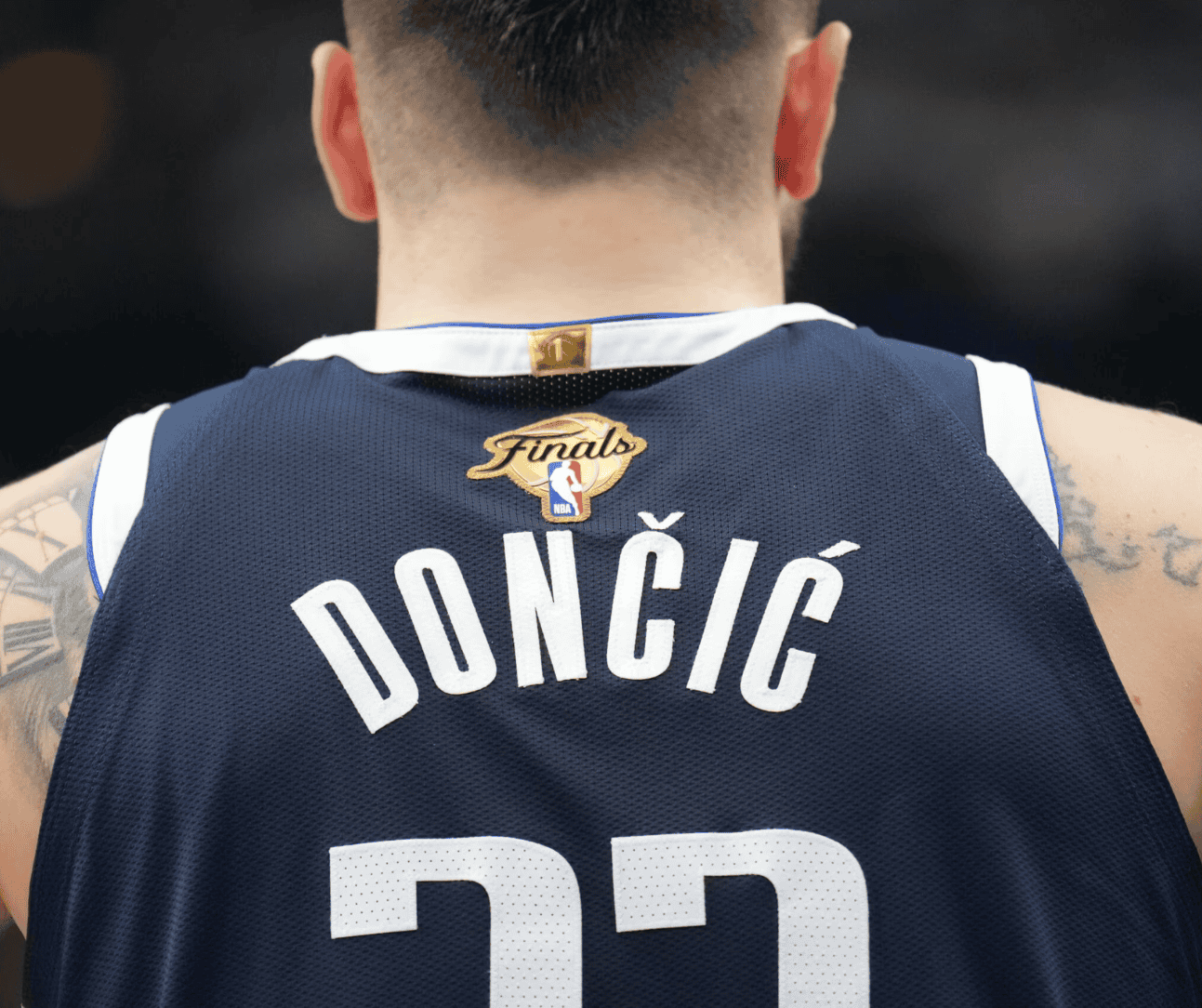
Starting in 2022, the NBA Finals patch design underwent a significant visual update to mark the league’s 75th anniversary. The most striking change was the introduction of an elegant cursive “Finals” script, slightly italicized and finished in a glossy black material. This stylized lettering paid homage to earlier Finals logos, evoking a sense of nostalgia and championship tradition.
Behind the script, the patch features a gold basketball background with visible channel lines, mimicking the texture of a real basketball. This subtle detailing adds visual depth, curvature, and a refined, light-reflective quality that enhances the patch’s premium appearance.
The NBA logoman also saw a change in presentation. For the 2022 season, the league used the special NBA 75th diamond-shaped logo, reflecting the historic milestone. From 2023 onward, the patch returned to the classic red-white-blue NBA logo, now positioned more subtly beneath the Finals script to maintain visual balance.
Overall, the updated patch conveys a more premium and commemorative aesthetic, combining tradition with modern design sensibilities. Compared to the bold, straightforward 2017–2021 NBA Finals patch, the new version feels more dynamic, elegant, and richly detailed — a fitting emblem for the NBA’s most prestigious stage.




Adding NBA Finals Patches to Your Jersey Collection
One of the best ways to elevate a jersey in your collection is by adding an NBA Finals patch. Not only does it enhance the visual appeal, but it also adds meaning—commemorating the year your team made it to the biggest stage in basketball. It’s a symbol of legacy, history, and that special Finals moment.
However, if you’re going to add a Finals patch, do it right. Here are some key tips to make sure your patched jersey is both accurate and authentic:
1. Match the Correct Year
Each jersey should match the exact season the team made the Finals.
Don’t put a Finals patch on a jersey from a season they didn’t make it—or worse, from a completely different year. It throws off the historical accuracy.
2. Match the Correct Jersey Color
Not all jersey colors were worn during the Finals. Some teams only wore white or association editions, others went with alternate or city editions. Before adding a patch, do your research and check game photos to confirm which version was actually worn on court.
3. Use the Correct Patch Design
Finals patch designs have changed over time—from embroidered patches in the early 2000s to the heat-press silicone patches used today. Each year has a distinct patch, so it’s important to choose the right one for the year you’re representing. Adding the wrong year’s patch can ruin the accuracy and collector value.
Know the Difference Between Collector vs. Authentic Patches
This is something most casual fans miss. For Nike-era jerseys, the Finals patch used on authentic (game-style) jerseys is not the same as the collector patch sold to the public:
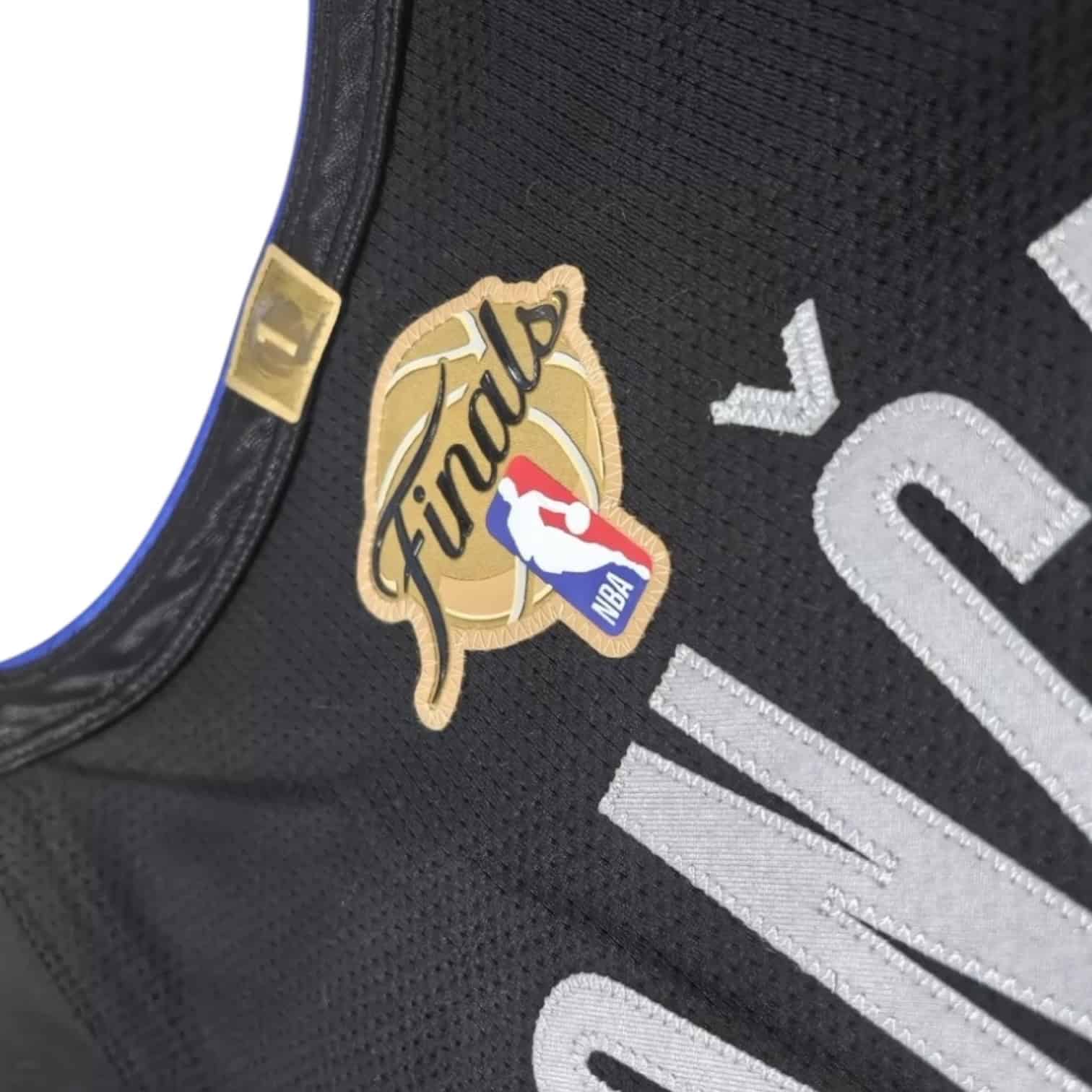
Authentic patch: Heat-pressed rubberized style, thinner and more flexible.
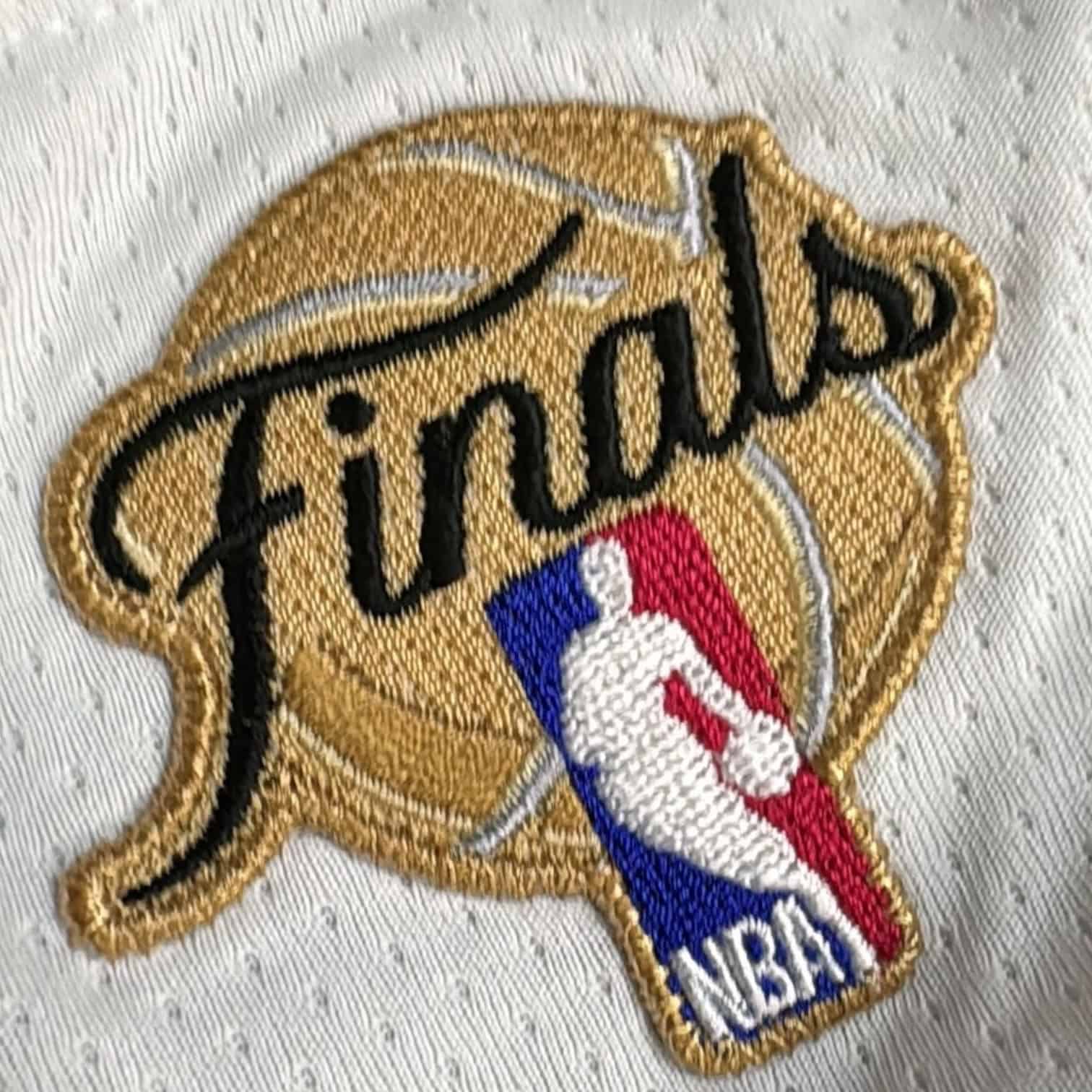
Collector patch: Thicker, sometimes embroidered, and textured—made for display or casual stitching.
It may look similar at first glance, but putting a collector patch on a Nike authentic jersey can look off, especially if you’re aiming for realism. It’s always better to match the material to the jersey type.

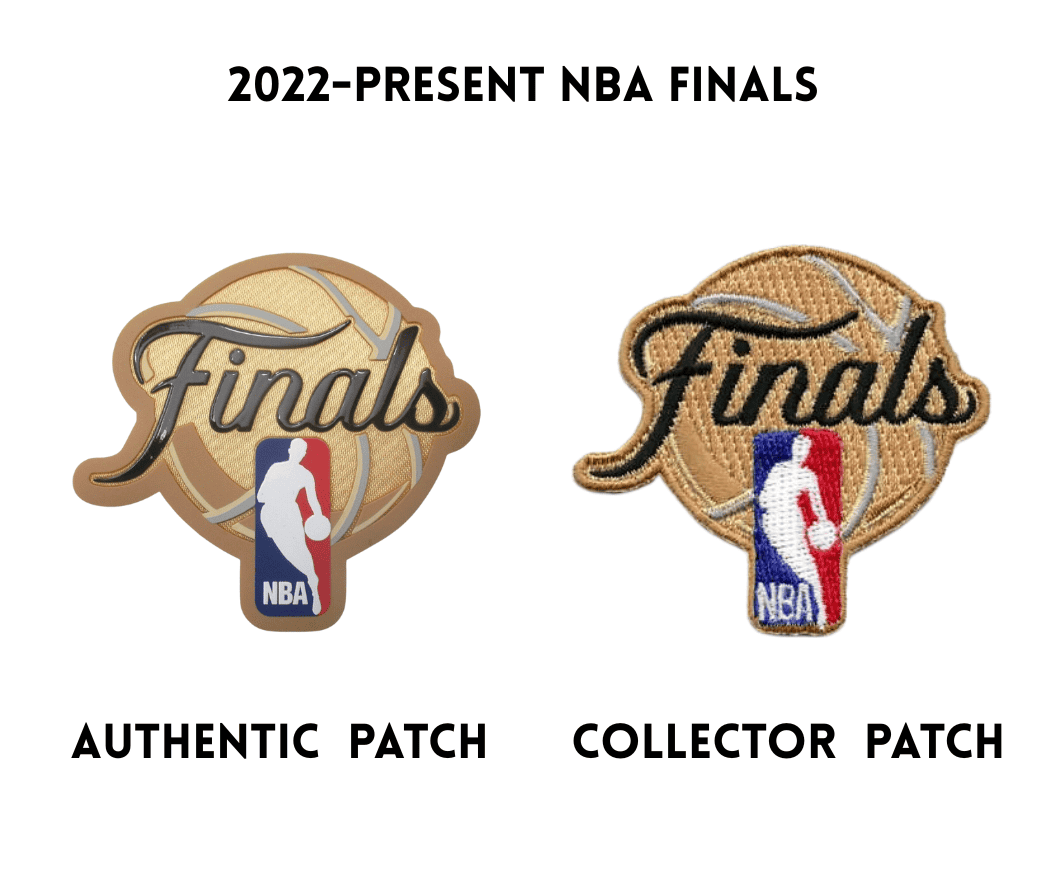
Back in the day, the only way to get a jersey with an NBA Finals patch was to own a game-worn or game-issued jersey. Fans had to buy official Finals collector patches and stitch them on manually—a true DIY method for swingman and authentic jerseys. Once Nike took over NBA jerseys, they began releasing limited Swingman jerseys with Finals patches during the Finals period. In the first couple years, they used the textured collector-style patch heat-pressed onto the jersey, which gave a more premium feel. But in recent years, Nike switched to a flat heat-press
Finals patch for limited Swingman jerseys—easier to produce, but less textured. Some team stores and even NBA Store NYC have sold Swingman jerseys with rubberized authentic-style Finals patches. These are legit, but rare.

Best Practice for Adding an NBA Finals Patch
For most fans, the best and most reliable approach is to buy a correct-year NBA Finals collector patch and press or stitch it onto a matching Swingman jersey. This method keeps the look clean and historically accurate—perfect for display, casual wear, or commemorating your team’s Finals run.
For more serious collectors or those aiming for a game-accurate build, it’s important to go a step further: purchase a correct-year authentic NBA Finals patch and stitch it onto a matching authentic jersey. These patches are made specifically for on-court jerseys and are usually thinner, more flexible, and heat-reactive—designed to bond seamlessly with performance fabrics.
It’s crucial to avoid mixing materials. Using a thick collector patch on an authentic jersey can look off, especially under close inspection, as the textures and finish won’t match. Whether for aesthetic value or collector integrity, getting the patch type right makes all the difference.